Category Archives: Movement

What is video editing?

Update 05/08/24

Forgive me if you don’t know what video editing is. This post is for those just beginning the journey or needing a refresher.

Debates may arise over the first film, with some pointing to the groundbreaking Horse in Motion (1878). This cinematic marvel was crafted using multiple cameras, a collection of still photographs ingeniously assembled into a motion picture. A staggering 24 cameras were employed to capture this pioneering piece of film history.

Actual motion picture cameras were developed in the 1880s. That is when the camera started capturing all the single images on one reel. At this time, there was no editing. Each film ran as long as there was a film to roll.

Early filmmakers would shoot scenes, halting the camera’s crank when they deemed the shot complete. They would then reset for the next scene, resuming the crank when all was ready. This marked the nascent stage of editing, a form of editing within the camera that did not involve manipulation of the reel.

Editing began in the 1900s. Did you know that one of the first reasons for editing is that studios want films to be longer? They wanted multiple film reels compiled into one continuous movie. After that revelation, they started putting images together to try and tell a story.

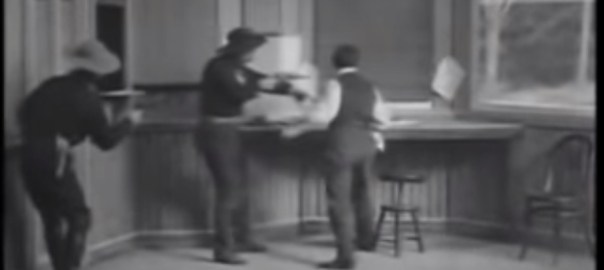
One of the very first films that not only combined reels but began to develop some rules (or guidelines, as I prefer) for video editing is The Great Train Robbery (1903)

Watch this movie and realize

  • There is action/movement in every scene
  • They maintain screen direction (except for one edit)
  • There is sequencing
  • Each edit advances the story
  • There is an effort made in pacing/rhythm
  • Editing has mostly stayed the same for over 100 years.
Movement in Every Edit (well almost every edit) in Video Editing

I’m a fan of movement. You should be a fan of movement. I like to have as much movement in a story as possible. Often, I base my edit decisions on movement. If I’m choosing between two shots, I’ll choose motion over a better-composed shot with no action happening in the shot.

We are a visual medium.

Give your viewer as much to look at as they possibly can handle. Our story for this post is It’s Bad.

This is a spot news story edited in about an hour.  There are practices you can learn here and apply to any edit. The idea of motion isn’t a new one. Next time you are editing a story, think about the exact frame you are choosing as your IN point and the action in that edit.

There are a lot of static shots.  The standard video for stories like these is;

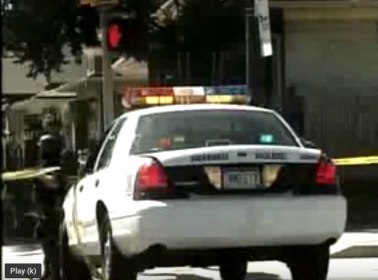
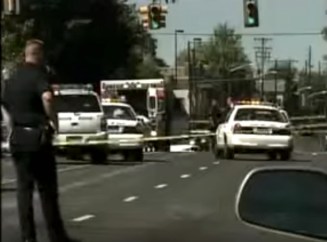
Crime tape

Screen Shot 2020-03-31 at 8.35.14 AM

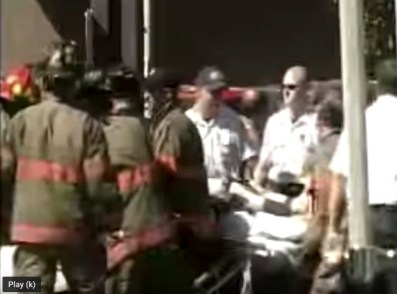
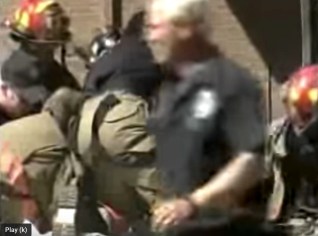
Paramedics working

Screen Shot 2020-03-31 at 8.39.30 AM

Cops observing

03

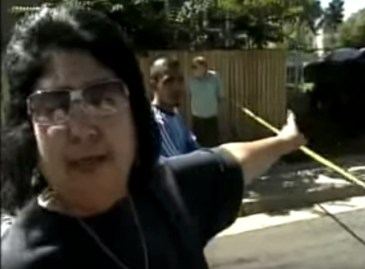
and spectators watching

Screen Shot 2020-03-31 at 8.57.56 AM

We know what the video is going to be like in any type of story like this. So often in stories like these, I see edits chosen with nothing going on.

Only 6 shots with no movement, count them.

Pay particular attention to the next few shots and what I choose as the IN point.

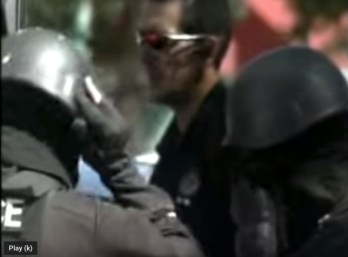
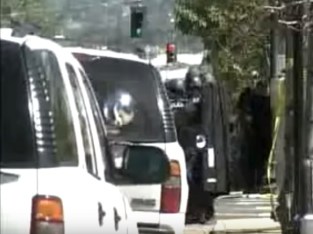
[:07] IN point when S.W.A.T member puts on his helmet

Screen Shot 2020-03-31 at 9.02.35 AM

[:08] – IN point when another S.W.A.T member move his head

Screen Shot 2020-03-31 at 9.03.14 AM

[:09] – IN point when a police officer takes a step

Screen Shot 2020-03-31 at 9.04.30 AM

[:11] – I wait until just before you see many S.W.A.T members moving forward

Screen Shot 2020-03-31 at 9.05.01 AM

I’m trying to keep the story moving.  This may sound obvious but watch a newscast and look at how often there is nothing is going on within a shot.  I strive to have something going on in as many shots a possible.  Even little things like;

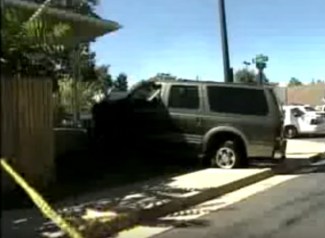
[:15] – Crime tape blowing in the wind

Screen Shot 2020-03-31 at 9.08.10 AM

[:20] – Cops walking from frame right to frame left

Screen Shot 2020-03-31 at 9.08.51 AM

[:38] – Officer’s arm moving in the left-hand corner of the screen

Screen Shot 2020-03-31 at 9.09.44 AM

I’m waiting for something to happen before I set the IN point.

Watch It’s Bad again.  Now that you know what to look for, notice how much all the little things like a bit of movement adds to the story.  Next time you edit a story like this think about it

  • Think about what’s in the shot

  • Is there something going on you can show instead of just a static shot

  • Wait for something to happen and then set your IN point