Update 05/08/24
Spatial relation is an often-overlooked principle of video editing. Spatial relation is something your brain has been processing since you were a baby.

Around the 8th month of life, you begin moving around your world. You explore the size and shape of objects and observe people and objects as they move through space.

How does this connect to editing video? Well, your brain wants to understand the world, too. Since your brain was in its infancy, it’s been trying to figure out where things go. As an editor, you must help the audience understand where they are in the world they watch. You have to help them connect points in space or time. So how do you do that?
The story I’m going to use for this post is Give Him The Best Life
I start the story on a tight shot.

It’s an important shot because it tells you this person is ill. I’m getting you into the story. You have no idea where he is. The 2nd shot is a medium shot
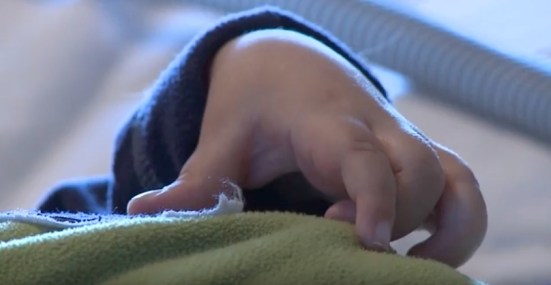
You see his hand and chest rising (I match the narration). The 3rd shot is a medium shot back to his face.

See how he looks up? The next shot is his mother above him.

With the 3rd shot, the medium of him on the bed at [:05], and this shot edited together, I’m establishing a spatial relationship between Reece and his mother and how they exist in his bedroom.
We know we are in the bedroom. I need to move Reece to a different position on the bed. First, I’m going to use a tight shot, so the audience doesn’t feel jarred by the fact he’s in a different spot on the bed, and the apparatus on his face is no longer there.
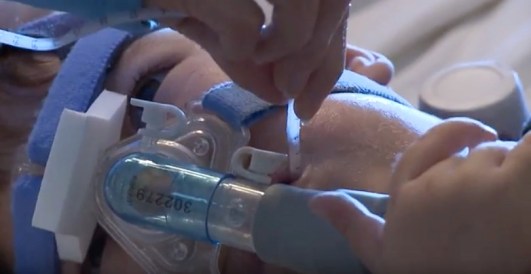
There is a series of shots of him on the bed with his mom helping him get ready for the day. All these shots are tight or medium.


I firmly believe in tight shots’ power and love using them. My 2nd most loved shot is the wide shot. As wide as you possibly can be in the environment you are in. Why? Your audience needs to understand the world you are putting them in, and the best way to do that is with wide shots.
In this story, I established that Reece is in bed. Now, by going wide,
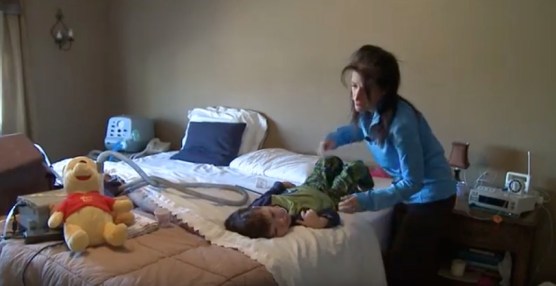
the audience understands where Reece is, where mom is, and what else is in the room about those two. That is editing, keeping in mind spatial relations.
At [:48], I start wide this time.
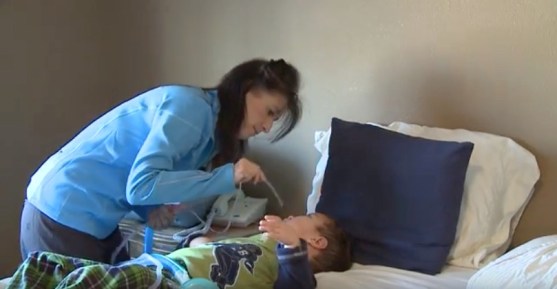
You see Reece still on the bed and his mother holding a tube. Then, a match action cut off her using the tube to suction material out of his lungs.
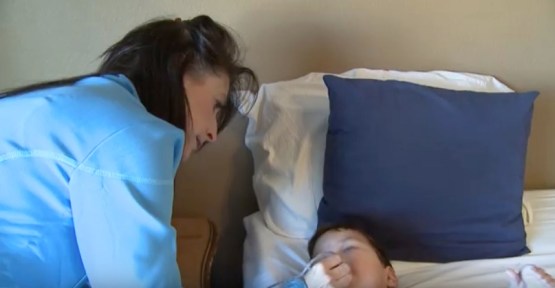
The general guideline in editing is to start wide, then move to a medium shot, then to a tight shot. That doesn’t always work (hence why it’s a guideline and not a rule). Sometimes, I start a sequence broad. Sometimes, I start a sequence tight. It depends on the shots I have and how they work together and maintain spatial relationships with each other. I don’t want the viewer distracted. I don’t want to be curious about how everything works in my world. I’m editing. I want to help them as much as possible so they can watch the story and not watch the editing.
At [:52], I need to go to the next part of the story. I use a tight shot.

of mom beating on Reece’s chest.
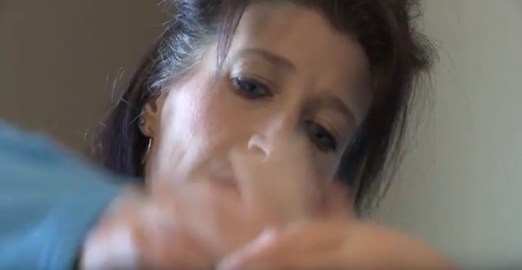
Then, to a tight shot of Mom. Then, to a medium of the two of them.
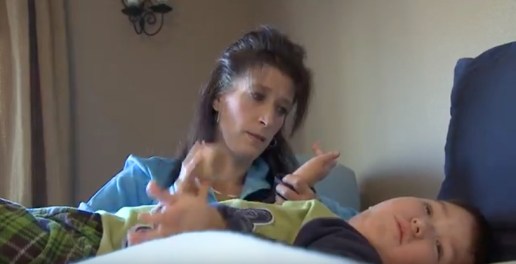
I could put these three shots together in any order, and they would have worked. The previous sequence dictated how I put these shots together. The important thing is that I went to a medium shot, where you could see the two of them and how they relate to where they are in their world.
At 1:09, I start tight again.
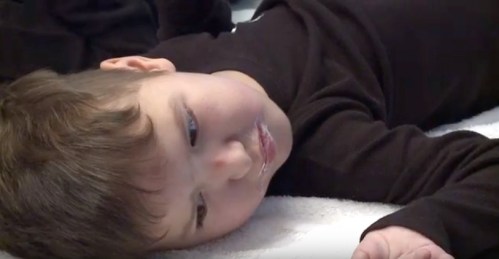
Then go wide,
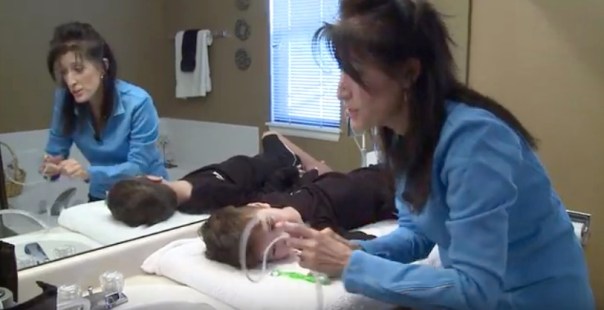
so the viewer understands we are now in the bathroom. I started tight because I didn’t want a jump cut from the interview to mom in the bathroom, just trying to avoid anything jarring to the viewer.
At 1:48, Reece is in a new spot.
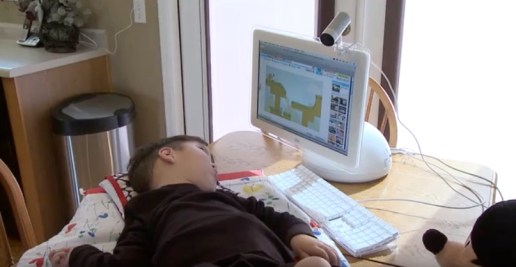
On the kitchen table. Then, a tight shot of his hand on the mouse ball.
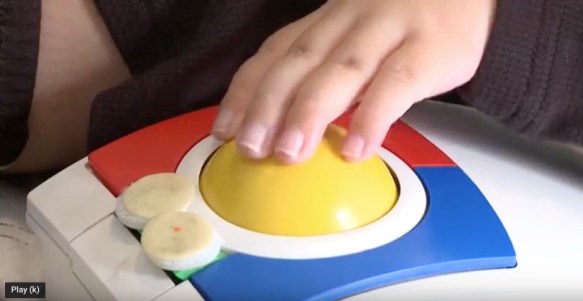
If I only have time to show two shots in a sequence, I’m generally going to use a wide shot and a tight shot. Wide is for spatial relation, and tight is because I want the viewer to look at only one piece of information (which a tight shot should contain).
I continue moving Reece around the house, using tight shots and then wide shots so the viewer understands where he is in the world I’m editing.


My photographer gave me lots of tight shots to choose from. I wished for more wide shots, even some super-wide shots.
Understanding spatial relations is significant in editing. Help your audience know where they are and what goes where in the world that’s in front of them. The tight shot is a vital storytelling tool. The vast and super-wide shots are #2 on my list.
Thanks for reading.
Shawn Montano
 edit-foundry.com